A brow lift repositions eyebrows that have descended with age, opening the eye area and softening a tired or stern expression. Two techniques account for most of the procedures performed today: the endoscopic brow lift, which raises the whole brow through small incisions hidden in the hair, and the temporal brow lift, which lifts only the outer part of the brow. This guide explains how they differ, who each one suits, and what recovery involves week by week.
Key points at a glance
- The endoscopic technique treats the full brow and the frown area; the temporal technique treats the outer third only.
- Both place the scars inside the hair-bearing scalp, where they are normally concealed.
- Most people plan one to two weeks away from work and social commitments.
- The brow settles into its final position over three to six months.
- No single technique has been shown to be superior for everyone: the choice depends on anatomy, hairline and the degree of descent.
In this article
What a brow lift corrects
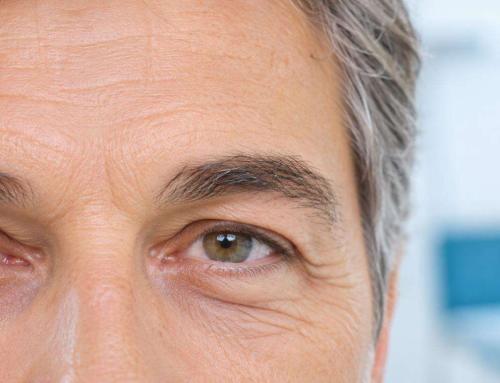
With time, the forehead tissues lose support and the eyebrows drift downwards. The outer portion usually descends first, because it has the least muscular support. The result is a heavier upper eyelid, skin gathering at the outer corner of the eye and, in some people, a look of fatigue or sadness that does not match how they feel.
A brow lift, also called a forehead lift, addresses three things:
- Brow position – the eyebrow is returned to a higher, more natural level.
- Upper eyelid heaviness – when the fold of skin over the eyelid is caused by a low brow rather than by excess eyelid skin.
- Frown and forehead lines – with techniques that give access to the muscles between the eyebrows.
The aim is a rested appearance, not a raised or surprised one. A well-planned lift is measured in millimetres.
Endoscopic brow lift
The endoscopic approach uses a thin camera and fine instruments introduced through a few short incisions, generally three to five, placed behind the hairline. Working on a screen, the surgeon releases the tissues that hold the brow down, can weaken the muscles responsible for frown lines, and then secures the forehead in its new position with sutures or small absorbable fixation devices.
Who it tends to suit
- Descent of the whole brow, including the inner and central portions.
- Marked vertical frown lines between the eyebrows.
- A forehead of normal or short height, with a stable hairline.
Limits to be aware of
Because the forehead is moved upwards as a unit, the hairline may rise slightly. For this reason the technique is less suitable for people with a high forehead or a receding hairline, for whom an incision placed at the hairline may be a better option. The procedure is usually performed under general anaesthesia or deep sedation.
Temporal brow lift
The temporal brow lift, also known as a lateral brow lift, works through one incision on each side, hidden in the hair above the temple. The surgeon lifts the tissues of the temple and the outer brow, removes a small amount of excess scalp and closes the incision.
Who it tends to suit
- Descent limited to the tail of the eyebrow.
- Hooding of skin at the outer corner of the eye.
- People having upper eyelid surgery at the same time, when the outer brow also needs support.
Limits to be aware of
The temporal lift does not raise the inner brow and does not treat frown lines, since the central forehead is left untouched. It is a shorter operation and can often be carried out under local anaesthesia with sedation, which is one reason it is frequently combined with blepharoplasty.
Endoscopic vs temporal brow lift: comparison
| Aspect | Endoscopic brow lift | Temporal brow lift |
|---|---|---|
| Area treated | Entire brow and forehead | Outer third of the brow and temple |
| Incisions | Three to five short incisions behind the hairline | One incision per side, within the temple hair |
| Frown lines | Can be improved | Not addressed |
| Effect on hairline | May rise slightly | Minimal change |
| Anaesthesia | Usually general or deep sedation | Often local with sedation |
| Typical time away from work | About 10 to 14 days | About 7 to 10 days |
| Often combined with | Facelift, eyelid surgery | Upper eyelid surgery |
Times are indicative and vary from person to person. The two approaches can also be combined: a published series with ten years of experience reported that pairing endoscopic release with a temporal lift raised both the inner and outer brow with a low complication rate.
Other techniques exist
Coronal, hairline (pretrichial), direct and through-the-eyelid brow lifts are still used in selected cases, for example with a very high forehead or marked asymmetry. A consultation should cover all the options that apply to your anatomy, not only the two described here.
Brow lift or eyelid surgery?
Heaviness of the upper eyelid has two possible causes: excess eyelid skin or a brow that has dropped. They look similar in the mirror and call for different operations. A simple check is to lift the eyebrow gently with a finger to where it used to sit: if the eyelid fold largely disappears, the brow is contributing to the problem.
Removing eyelid skin when the real cause is a low brow can pull the eyebrow down further. This is why a careful assessment of brow position is part of any consultation for upper blepharoplasty, and why the two procedures are often planned together.
Brow lift recovery timeline
Recovery is usually described as more uncomfortable than painful: a feeling of tightness across the forehead, mild headache and swelling are the most common complaints.
| Period | What to expect | What helps |
|---|---|---|
| Days 1–3 | Swelling and bruising peak and may move down towards the eyelids and cheeks. Tightness and a light dressing or wrap. | Rest with the head raised, cold compresses as instructed, prescribed pain relief. |
| Days 4–7 | Bruising starts to fade. Itching or numbness of the scalp is common. | Gentle hair washing once the surgeon allows it. Short walks. |
| Days 7–14 | Stitches or clips are removed. Most visible signs settle and many people return to desk work. | Avoid bending, lifting and strenuous effort. |
| Weeks 3–4 | Residual swelling is subtle. Exercise is reintroduced gradually. | Sun protection for the forehead and scars. |
| Months 3–6 | The brow reaches its final position, scalp sensation returns and scars mature. | Follow-up visits as scheduled. |
Practical tips for the first two weeks
- Sleep on your back with two or three pillows.
- Do not take aspirin or anti-inflammatory medicines unless your surgeon has approved them.
- Avoid smoking, which slows healing.
- Postpone hair colouring and heat styling until the incisions have healed.
- If you are travelling, ask your surgeon when it is appropriate to fly home.
Risks and side effects
Significant complications after brow lift surgery are infrequent, but every operation carries risks that should be discussed before giving consent.
What can happen
- Numbness or itching of the scalp and forehead – common and usually temporary, resolving over weeks or months.
- Hair thinning near the incisions – generally temporary; permanent loss is uncommon.
- Asymmetry – small differences between the two brows may persist or appear.
- Weakness of the forehead muscles – caused by irritation or injury of the nerve branch that moves the brow. It is rare and in most cases temporary.
- Bleeding, haematoma or infection – as with any surgery.
- Difficulty closing the eyes completely – more likely in people who have had previous eyelid surgery.
- Partial relapse – the brow may descend again over time.
Contact your surgeon promptly in case of increasing pain, sudden swelling on one side, fever or changes in vision.
How long results last
The improvement is visible as soon as the swelling goes down and continues to refine for several months. A brow lift does not stop ageing, but the correction is long-lasting: many people keep the benefit for years. Skin quality, sun exposure, smoking and the strength of the muscles that pull the brow down all influence how the result holds over time.
For people with mild descent who are not ready for surgery, botulinum toxin can raise the tail of the brow by a few millimetres for some months. It is a temporary measure and does not replace surgery when the descent is more marked.
Frequently asked questions
Is a brow lift painful?
Pain is usually modest and controlled with ordinary pain relief. Tightness, pressure and a mild headache in the first days are more typical than sharp pain.
Will the scars be visible?
In both endoscopic and temporal techniques the incisions sit inside the hair-bearing scalp, so they are normally hidden once healed. Scar quality still varies between individuals.
What is the right age for a brow lift?
There is no fixed age. Most people who have the procedure are between 40 and 65, but the indication is anatomical: brow position matters more than date of birth.
Can a brow lift be combined with other procedures?
Yes. It is commonly performed with upper eyelid surgery or a facelift, so that the upper face is in balance with the rest. Combining procedures may lengthen the operation and the recovery.
Will I look surprised?
An over-raised brow is the result of excessive correction, not of the technique itself. Planning aims at restoring your own earlier brow position, with the arch and height that suit your face.
How do I know which technique I need?
It depends on which part of the brow has descended, the height of your forehead, your hairline and whether frown lines need treating. These are assessed in person, with the face at rest and in movement.
Deciding on the right technique starts with an assessment
At Clinica Pallaoro in Padua, a consultation is the moment to examine brow position, eyelids and hairline together, and to understand which approach, if any, is appropriate for you. You will receive clear information on the procedure, recovery and risks, with time to ask your questions.
Medical sources
- StatPearls, NCBI Bookshelf – Endoscopic Brow Lift (last update June 2025).
- StatPearls – Direct Brow Lift, overview of brow lift approaches and indications.
- Plastic and Reconstructive Surgery, 2019 – Endoscopic Temporal Brow Lift: Surgical Indications, Technique, and 10-Year Outcome Analysis.
- American Society of Plastic Surgeons – Brow lift recovery.
- The Aesthetic Society – Brow lift: safety considerations.
This article is for general information and does not replace a medical consultation. Indications, technique and recovery times are established by the surgeon after an individual assessment.