
Arm lift and body contouring in Italy
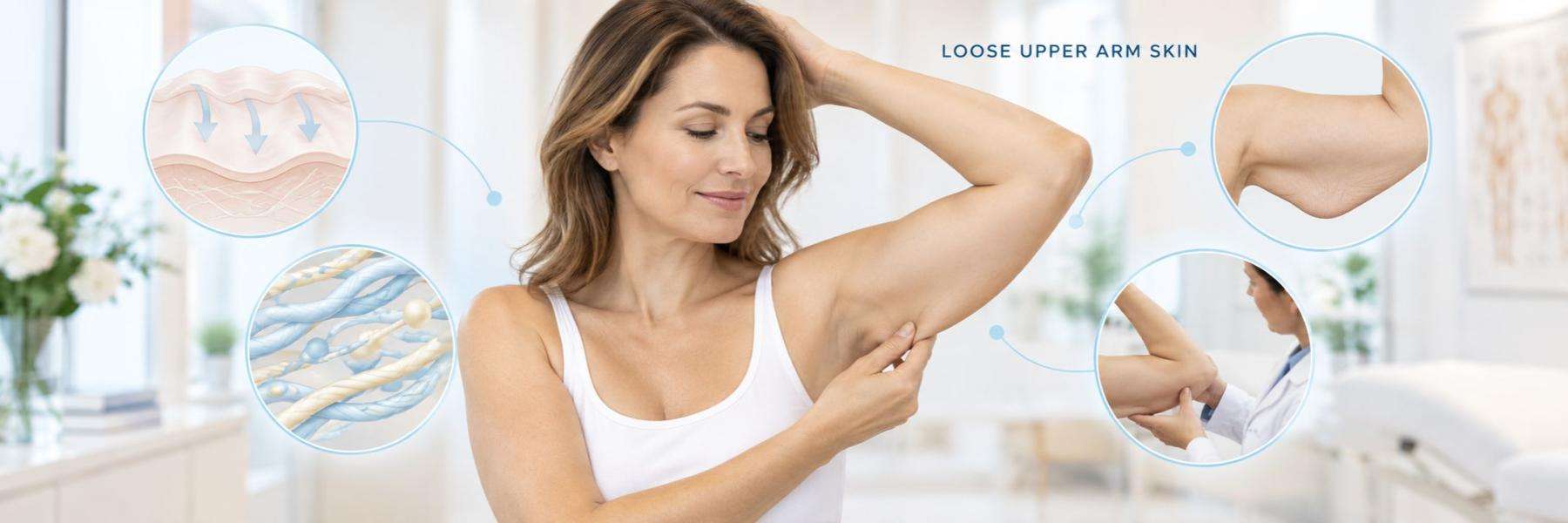
Loose upper arm skin can develop after substantial weight loss, ageing or repeated changes in body weight. The skin may appear soft and wrinkled or form a hanging fold between the armpit and elbow. Mild laxity may sometimes be improved with non-surgical treatments, while a significant excess of skin generally requires surgical removal through an arm lift.
At Pallaoro Medical Laser in Padua, Italy, treatment is selected according to skin elasticity, the amount and position of excess tissue, localised fat and the patient’s health. International patients can begin with a preliminary online assessment before travelling to Italy for the required physical examination.
Do you need liposuction or an arm lift?
Send photographs of your arms and relevant medical information for a preliminary assessment. The definitive indication can only be confirmed after an in-person examination.
What is loose upper arm skin?
Loose upper arm skin is a reduction in the firmness and elasticity of the tissues between the shoulder and elbow. It most commonly affects the inner and posterior parts of the arm, where the skin may become wrinkled, mobile or pendulous.
Patients sometimes describe this condition as “bat wings”, although this informal expression does not define its anatomical cause or severity. The visible change may involve:
- mild deterioration in skin texture;
- reduced skin elasticity;
- a localised fold near the armpit;
- skin excess extending towards the elbow;
- residual subcutaneous fat;
- a combination of skin and fat.
Loose skin is different from poor muscle tone. Exercise can strengthen the triceps and other upper-arm muscles, but muscle development cannot remove redundant skin.
The key distinction: liposuction removes selected subcutaneous fat, while brachioplasty removes excess skin. When both are present, a combined or staged approach may be considered.
What causes loose upper arm skin?
Ageing
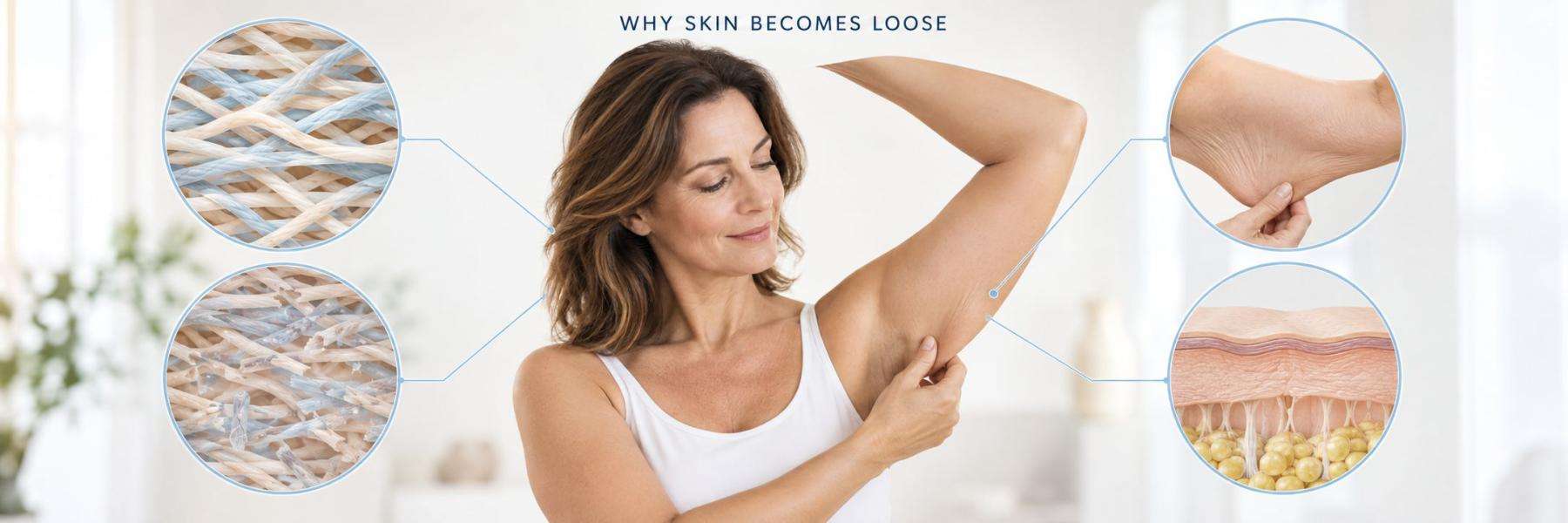
Skin gradually changes with age. Collagen and elastin become less effective at maintaining firmness, while the supporting tissues may stretch and descend. The redistribution of fat and loss of muscle volume can make the upper arms appear softer.
Age alone does not determine whether treatment is appropriate. General health, skin quality and the extent of correction required are more important.
Substantial weight loss
After major weight loss, the volume beneath the skin decreases. If the skin has been stretched for a prolonged period, it may not adapt fully to the smaller arm circumference.
The resulting skin excess can range from fine wrinkling to a heavy fold extending from the armpit towards the elbow. It may affect clothing choices and, in more pronounced cases, cause friction or irritation.
Repeated weight fluctuations
Repeated cycles of weight gain and loss can stretch the skin and supporting tissues. Even when each change is moderate, recurrent expansion and contraction may progressively reduce elasticity.
Genetic predisposition
Skin thickness, elasticity and the tendency to develop stretch marks vary between individuals. Some patients retain firm arms after substantial weight loss, while others develop laxity following a comparatively limited change.
Sun exposure and smoking
Long-term ultraviolet exposure contributes to the breakdown of collagen. Smoking and nicotine can impair circulation, accelerate skin ageing and increase the risk of wound-healing complications after surgery.
Changes following pregnancy or hormonal transitions
Pregnancy and menopause may influence body composition, fat distribution and skin quality. These changes are not identical for every patient and should be evaluated in the context of general health and weight stability.
Different degrees of upper arm laxity
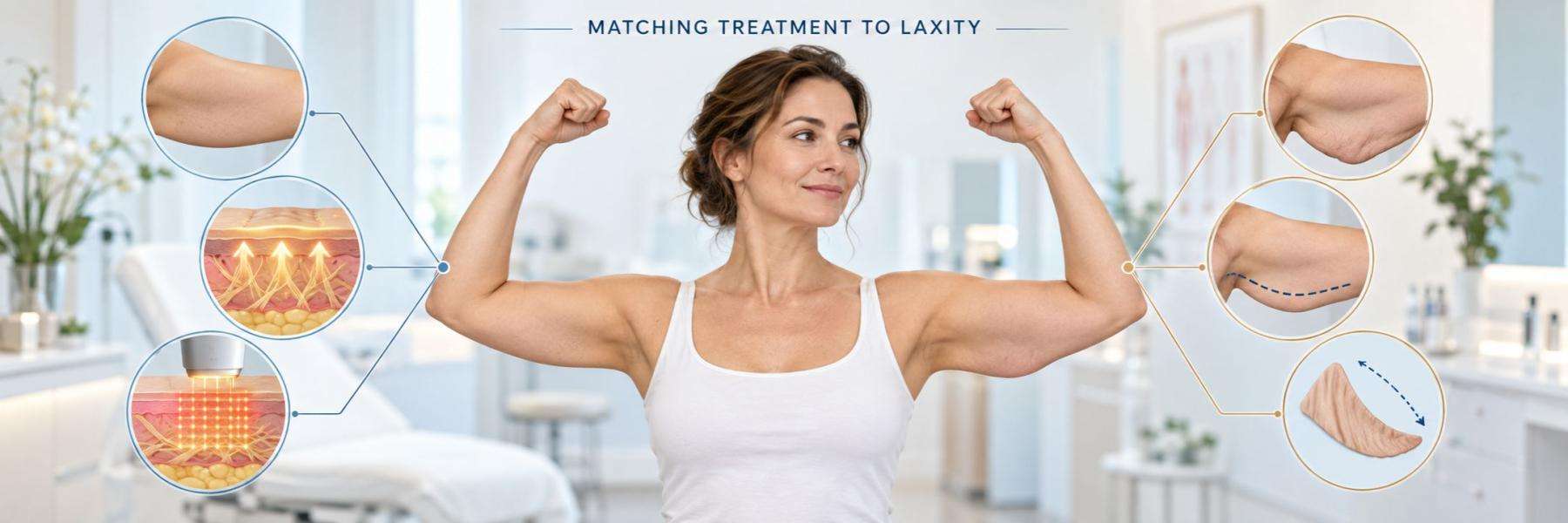
The amount and distribution of loose skin influence the choice of treatment and the length of the surgical scar.
| Clinical presentation | Typical features | Possible approach |
|---|---|---|
| Mild skin-quality change | Fine wrinkling or limited loss of firmness | Observation or selected non-surgical treatment |
| Localised laxity near the armpit | Small fold confined to the uppermost arm | Limited-incision arm lift in selected patients |
| Moderate skin excess | Visible hanging tissue extending along part of the arm | Brachioplasty with an individually planned incision |
| Extensive laxity after major weight loss | Skin excess extending from the arm towards the armpit or chest | Extended arm lift or broader body-contouring plan |
| Loose skin with residual fat | A heavy fold containing skin and subcutaneous fat | Arm lift with selective liposuction when appropriate |
A short scar cannot correct every degree of skin excess. Attempting to remove extensive laxity through an inadequate incision may leave residual folds or produce an unbalanced contour.
Is the concern fat or loose skin?
Upper-arm fullness can be produced by localised fat, excess skin or both. This distinction is essential because the wrong procedure may make the appearance worse.
Localised fat generally feels thicker and can be pinched beneath skin that still retains elasticity. Loose skin feels thinner, more mobile and may fold when the arm is raised or lowered.
When skin elasticity is adequate, reducing fat with liposuction may allow a degree of natural retraction. When elasticity is poor, removing volume can leave the skin emptier and more pendulous.
The physical examination evaluates:
- skin thickness and elasticity;
- the amount of pinchable fat;
- the position of the loose tissue;
- the relationship between the shoulder, arm and elbow;
- natural differences between the two arms;
- scars, swelling and vascular or lymphatic symptoms.
Clinical assessment before treatment
The consultation is intended to determine whether the expected improvement justifies the scars, recovery and risks associated with treatment.
The surgeon examines both arms in different positions and discusses:
- the patient’s main concern;
- the distribution of skin excess and fat;
- the likely position and length of scars;
- the degree of improvement that can reasonably be expected;
- possible asymmetry;
- alternative treatments, including no treatment;
- recovery requirements and activity restrictions;
- possible complications.
The medical history should include previous operations, allergies, medicines, supplements, smoking or vaping, changes in weight, previous blood clots and medical conditions that could affect anaesthesia or healing.
Sudden swelling, pain, redness or a pronounced difference between the arms requires medical evaluation and should not automatically be treated as an aesthetic problem.
Can loose arm skin be treated without surgery?
Selected energy-based treatments may improve skin texture or produce limited tightening when laxity is mild. Technologies may include fractional CO₂ laser, radiofrequency or RF microneedling.
These treatments stimulate a tissue response rather than physically removing excess skin. Improvement is generally gradual, variable and less substantial than that produced by brachioplasty.
Non-surgical treatments cannot:
- remove a hanging fold of skin;
- provide the same change as brachioplasty;
- guarantee a specific degree of tightening;
- prevent future ageing;
- correct every type of stretch mark or surface irregularity.
Fractional CO₂ laser
Fractional CO₂ laser creates controlled microscopic treatment zones. It may improve selected aspects of skin texture, fine wrinkling or superficial scarring. The settings must be adapted to skin type and the area treated.
Possible effects include redness, swelling, crusting, prolonged pigmentation changes and scarring. Several sessions may be recommended, and it should not be presented as an alternative to surgical skin removal in severe cases.
RF microneedling
RF microneedling delivers radiofrequency energy through needles inserted to selected depths. It may be considered for mild laxity or textural concerns.
The treatment is not risk-free. Reported complications associated with certain uses include burns, scarring, pigmentation changes, unwanted fat loss and nerve injury. The device, settings and indication must be selected carefully.
Realistic expectations: non-surgical treatments may improve mild skin laxity, but they cannot eliminate a substantial hanging fold or reproduce the result of an arm lift.
The role of liposuction
Upper arm liposuction treats subcutaneous fat rather than loose skin. It may be appropriate when the skin is sufficiently elastic or may be combined with an arm lift when residual fat contributes to the contour.
Removing too much fat can produce an unnaturally empty appearance, irregularities or more visible laxity. Treatment should preserve smooth transitions between the shoulder, upper arm and elbow.
For patients whose main concern is localised adiposity rather than skin excess, further information is available on the page dedicated to upper arm fat.
Arm lift surgery: brachioplasty
An arm lift, medically known as brachioplasty, removes redundant skin and reshapes the upper arm. The procedure is personalised according to the amount and distribution of laxity.
Limited-incision arm lift
When excess skin is confined near the armpit, selected patients may be suitable for a shorter incision placed mainly within this area. This technique cannot correct laxity extending significantly towards the elbow.
Standard brachioplasty
For more extensive skin excess, the incision generally extends from the armpit along the inner or posterior aspect of the upper arm. Redundant skin is removed and the remaining tissues are repositioned and closed.
Extended arm lift
After major weight loss, laxity may continue through the armpit towards the lateral chest. An extended procedure may be considered to treat this broader pattern.
This approach creates a longer scar and involves more extensive surgery. The potential improvement must be weighed carefully against scar visibility, recovery and operative risk.
Brachioplasty combined with liposuction
Selective liposuction may be performed when excess fat accompanies loose skin. The purpose is to improve contour while protecting tissue circulation and avoiding excessive removal.
Combining the procedures is not automatically appropriate for every patient. The surgeon must consider anatomy, health and the extent of treatment considered safe.
Who may be a suitable candidate?
A potential candidate for brachioplasty generally:
- has a stable excess of upper-arm skin;
- has reached a reasonably stable weight;
- is in sufficiently good health for elective surgery;
- understands that the procedure leaves permanent scars;
- has realistic expectations;
- can follow postoperative restrictions;
- can attend the required follow-up appointments;
- does not smoke or can stop as medically instructed.
Surgery may need to be postponed or reconsidered when:
- substantial further weight loss is planned;
- weight is fluctuating significantly;
- smoking increases healing risk;
- medical conditions make elective surgery unsafe;
- there is unexplained swelling or lymphatic disease;
- expectations cannot realistically be achieved;
- adequate postoperative assistance is unavailable;
- an international patient cannot remain in Italy for early monitoring.
Preparing for arm lift surgery
Preoperative investigations are selected according to age, health and the planned procedure. They may include blood tests, an electrocardiogram or other specialist assessment.
The clinic must receive a complete list of prescribed medicines, non-prescription products and supplements. Patients should not stop medication without instructions from the doctor responsible for their care.
Nicotine can reduce tissue circulation and increase the risk of wound complications. Patients may be required to stop smoking or vaping before and after surgery.
Practical preparation may include:
- arranging time away from work;
- organising assistance after discharge;
- preparing loose, front-opening clothing;
- following fasting instructions;
- planning transport;
- understanding wound and compression-garment care;
- avoiding rigid travel arrangements.
Recovery and expected results
Swelling, bruising, tightness, tenderness and temporary changes in sensation are common during early recovery. The two arms may heal at different rates.
Dressings and a compression garment may be used. Patients should follow individual instructions concerning showering, sleep position, arm elevation, wound care and movement.
Light walking is generally encouraged, while lifting, strenuous exercise and repeated overhead arm movements are restricted during early healing. The timing of returning to work depends on the procedure and the physical demands of employment.
The final contour cannot be assessed immediately. Swelling reduces gradually, while scars mature over several months. The result is influenced by anatomy, healing, residual tissue, weight stability and ageing.
Removed skin does not grow back, but the remaining tissues continue to age. Significant weight changes may produce further laxity.
Where are arm lift scars located?
Every brachioplasty leaves a permanent scar. Its position and length depend on the amount and location of skin requiring removal.
The scar may be:
- mainly within the armpit for very limited laxity;
- along the inner upper arm;
- along the posterior-inner border of the arm;
- extended towards the lateral chest after major weight loss.
The surgeon positions the incision to balance access, skin removal and visibility. No location makes the scar invisible in every arm position.
Scars may initially appear red, firm or raised and generally change as they mature. Their final appearance depends on genetics, skin type, wound tension, smoking, infection, sun exposure and postoperative care.
Risks and possible complications
Possible complications of brachioplasty include:
- bleeding or haematoma;
- infection;
- seroma or fluid accumulation;
- delayed healing or wound separation;
- skin or fat necrosis;
- widened, raised or otherwise unfavourable scars;
- asymmetry and contour irregularities;
- temporary or persistent numbness;
- injury to nerves, blood vessels or lymphatic structures;
- persistent swelling;
- restricted movement or uncomfortable scar tension;
- blood clots and pulmonary complications;
- anaesthetic complications;
- an unsatisfactory result;
- the possible need for revision surgery.
The individual likelihood of complications depends on health, smoking, body weight, previous surgery and the extent of treatment. These issues must be discussed during informed consent.
Increasing pain, fever, spreading redness, wound discharge or sudden one-sided swelling should be reported promptly. Chest pain, difficulty breathing, fainting or sudden leg swelling requires urgent medical attention.
Travelling to Padua, Italy, for an arm lift
International patients can begin with a preliminary remote assessment. This helps determine whether the concern appears to involve fat, skin or both and whether travelling to Padua for a physical consultation may be appropriate.
Information requested before travelling
- photographs of both arms from the front, side and back;
- photographs with the arms raised and resting;
- age, height and current weight;
- recent or planned weight changes;
- medical conditions and previous surgery;
- medicines, supplements and allergies;
- smoking or vaping habits;
- history of thrombosis, swelling or healing problems;
- the improvement the patient hopes to achieve.
The remote assessment cannot test skin elasticity, evaluate circulation or confirm surgical candidacy.
In-person consultation
The final plan is confirmed only after direct examination and review of the required tests. If the clinical findings differ from the preliminary information, the proposed procedure may be changed, postponed or cancelled.
Staying in Padua
The required stay depends on the extent of surgery, anaesthesia, health and early postoperative progress. Patients should allow sufficient time for the recommended checks before returning home.
A responsible adult may be required after discharge. Patients travelling alone should discuss postoperative assistance before confirming treatment.
Flying after surgery
The appropriate time to fly varies according to the operation, mobility, flight duration and personal thrombosis risk. Return travel must be authorised according to the patient’s actual recovery.
Follow-up after returning home
Video consultations and photographs can support follow-up but cannot replace an in-person examination if a complication is suspected.
Before departure, patients should receive written guidance about:
- wound and scar care;
- compression garments;
- medication;
- arm movement and lifting restrictions;
- warning signs requiring medical attention;
- scheduled follow-up;
- clinic contact details;
- when to contact a local doctor or emergency service.
Plan your arm lift in Italy
Send photographs and relevant medical information for a preliminary assessment. We can explain whether the concern appears more suitable for brachioplasty, liposuction or another approach.
Frequently asked questions
Can exercise eliminate loose upper arm skin?
Exercise can strengthen the underlying muscles but cannot remove redundant skin.
Can creams tighten sagging arms?
Moisturisers may improve hydration and surface appearance but cannot remove a hanging fold.
Can laser treatment replace an arm lift?
No. Laser may improve selected aspects of mild skin laxity but cannot reproduce surgical removal of substantial excess skin.
How do I know whether I need liposuction or brachioplasty?
Liposuction primarily treats fat. Brachioplasty removes excess skin. Physical examination is required because many patients have both conditions.
Can liposuction make loose skin worse?
Yes. When elasticity is poor, removing volume may make laxity more apparent.
Does an arm lift leave a visible scar?
Yes. Brachioplasty leaves a permanent scar whose length reflects the amount of skin removed. Its final appearance cannot be guaranteed.
Can the scar remain only inside the armpit?
Only selected patients with very limited laxity may be suitable for an incision mainly confined to the armpit. More extensive laxity requires a longer scar.
Is the result permanent?
The removed skin does not return, but ageing and significant weight changes can affect the remaining tissues.
Should I lose weight before surgery?
If further substantial weight loss is planned, postponing surgery until weight is reasonably stable may produce a more predictable result.
When can I return to work?
This depends on the extent of surgery and the type of employment. Work involving lifting or repeated arm movement generally requires more recovery time.
Can I travel alone?
A companion may be required after discharge. International patients travelling alone should arrange appropriate assistance in advance.
How long should I stay in Italy?
The recommended stay is personalised according to the procedure, health, flight duration and postoperative progress.
Can surgery be confirmed from photographs?
No. Photographs support preliminary assessment, but final candidacy requires an in-person examination and appropriate preoperative testing.
How much does an arm lift in Italy cost?
The cost depends on the extent of skin removal, scar length, possible liposuction, anaesthesia and clinical requirements. A personalised quotation should clarify what is included and which travel or accommodation expenses remain separate.
Medical references
- American Society of Plastic Surgeons – Arm lift
- American Society of Plastic Surgeons – Arm lift candidates
- American Society of Plastic Surgeons – Arm lift risks and safety
- American Society of Plastic Surgeons – Arm lift recovery
- NHS – Liposuction
- U.S. Food and Drug Administration – Non-invasive body contouring technologies
- U.S. Food and Drug Administration – Potential risks associated with certain uses of RF microneedling
This page provides general educational information and does not replace an individual medical consultation, physical examination, diagnosis or personalised treatment plan.
Medical review and editorial transparency
Medical reviewer: Dott. Carlo Alberto Pallaoro
Last medically reviewed: 14/09/2026
Clinic: Pallaoro Medical Laser, Via Santa Lucia 43, Padua, Italy